 EN
EN
 AR
AR
 BG
BG
 CS
CS
 DA
DA
 NL
NL
 FI
FI
 FR
FR
 DE
DE
 EL
EL
 IT
IT
 JA
JA
 KO
KO
 NO
NO
 PL
PL
 PT
PT
 RO
RO
 RU
RU
 ES
ES
 SV
SV
 TL
TL
 ID
ID
 LV
LV
 SR
SR
 SK
SK
 SL
SL
 UK
UK
 VI
VI
 SQ
SQ
 ET
ET
 HU
HU
 TH
TH
 TR
TR
 FA
FA
 GA
GA
 BE
BE
 AZ
AZ
 KA
KA
 LA
LA
 UZ
UZ
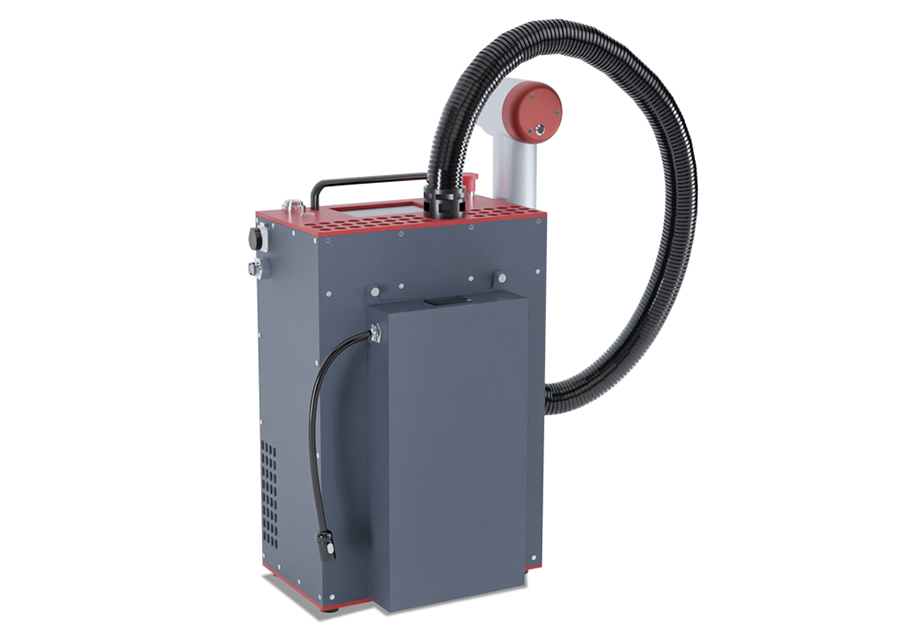
Laser cleaning is a surface treatment process that uses a high-energy-density laser beam to interact with surface contaminants, achieving the removal of rust, oil, coatings, and oxides. Whether residues remain depends on the cleaning mechanism, material properties, and process parameter settings.
I. Removal Mechanisms of Laser Cleaning
Laser cleaning mainly operates through thermal ablation, thermal decomposition and vaporization, plasma shock, and photomechanical effects. The contaminant layer absorbs laser energy within a very short time, undergoing decomposition, vaporization, or instantaneous shock-induced detachment, while the substrate, due to differences in absorption rate or limited thermal diffusion, generally does not participate in the reaction.
II. Main Sources of Residue Formation
1、Incomplete Removal of Contaminants
When the laser energy density is insufficient or the scanning speed is too high, the contaminant layer may only soften or partially decompose, leaving carbonized residues or thin residual films.
2、Pyrolysis Residues of Contaminants
Organic oils and coatings may generate trace carbon residues during thermal decomposition, appearing as powdery or thin-film deposits.
3、Secondary Environmental Deposition
If effective fume extraction and filtration systems are not implemented, vaporized products may redeposit on the workpiece surface during cooling.
III. Key Factors Affecting the Degree of Residue
1、Laser Type and Wavelength
Fiber lasers, pulsed lasers, and ultraviolet lasers exhibit different absorption characteristics on various materials, directly affecting removal completeness.
2、Process Parameters
Including pulse energy, frequency, pulse width, scanning speed, and overlap rate. Improper parameter matching can easily lead to residual contamination.
3、Properties of Contaminants and Substrate
Coating thickness, chemical composition, as well as substrate thermal conductivity and reflectivity, all influence cleaning performance.
IV. Common Measures to Reduce Residues
1、Optimize laser parameters to improve energy coupling efficiency
2、Use multiple passes or layered cleaning strategies
3、Equip fume extraction, dust removal, and filtration systems to prevent secondary deposition
4、Combine with air blowing or auxiliary cleaning processes when necessary
Under proper selection of laser type and correct configuration of process parameters, laser cleaning generally does not leave significant residues on the substrate surface. If parameters are mismatched or auxiliary systems are insufficient, trace residues may occur, but they can be effectively controlled through process optimization.