
 EN
EN
 AR
AR
 BG
BG
 CS
CS
 DA
DA
 NL
NL
 FI
FI
 FR
FR
 DE
DE
 EL
EL
 IT
IT
 JA
JA
 KO
KO
 NO
NO
 PL
PL
 PT
PT
 RO
RO
 RU
RU
 ES
ES
 SV
SV
 TL
TL
 ID
ID
 LV
LV
 SR
SR
 SK
SK
 SL
SL
 UK
UK
 VI
VI
 SQ
SQ
 ET
ET
 HU
HU
 TH
TH
 TR
TR
 FA
FA
 GA
GA
 BE
BE
 AZ
AZ
 KA
KA
 LA
LA
 UZ
UZ
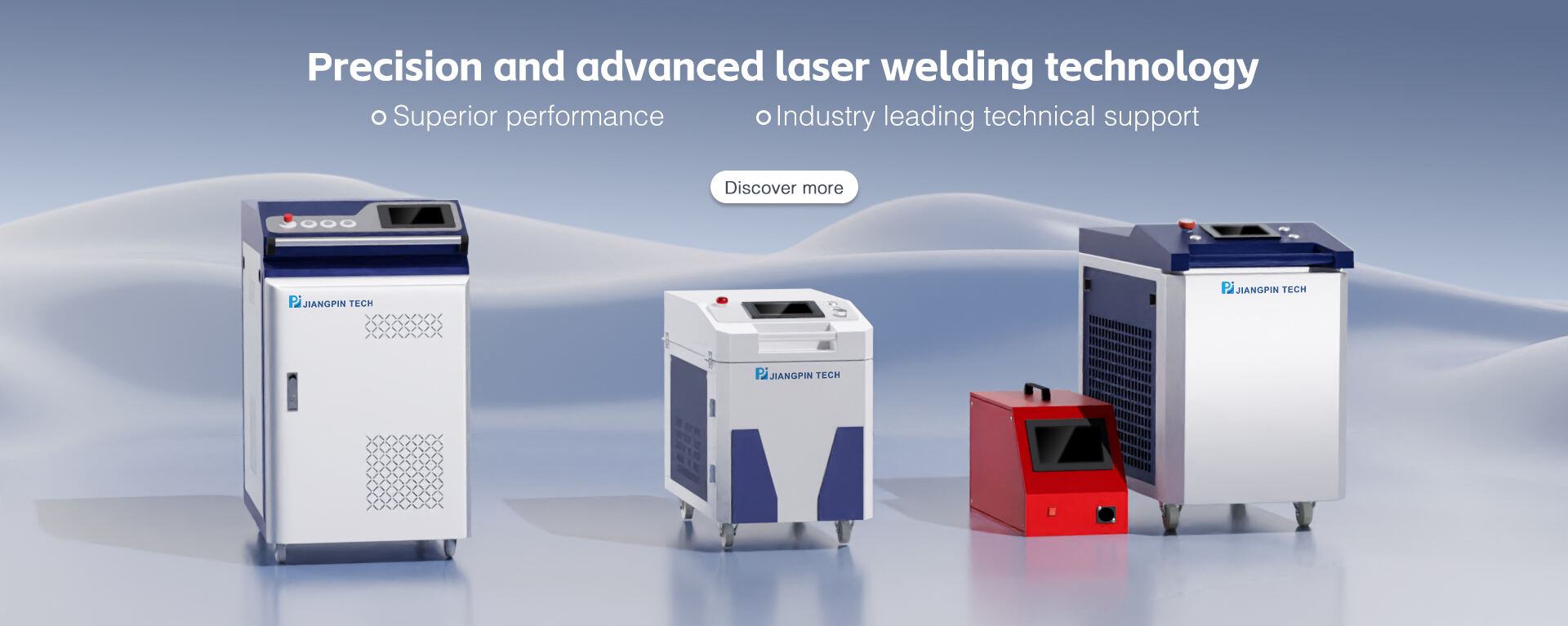
Laser welding machines are a type of processing equipment that utilize high-energy-density laser beams to achieve material joining. With concentrated energy, controllable heat input, and stable weld morphology, they are widely used for joining metal structural parts and precision components. In practical applications, laser welding offers significant advantages but also presents certain limitations.
I. Advantages of Laser Welding
1. High Energy Density
The laser beam has a high power density, which can generate an instantaneous molten pool in a local area to achieve deep penetration welding or conduction welding. It is applicable to workpieces requiring strict control of the heat-affected zone.
2. Low Heat Input and Minimal Deformation
Laser welding has a low total heat input and a narrow heat-affected zone (HAZ), reducing workpiece deformation and making it suitable for thin-wall parts and precision components.
3. High Welding Speed
Laser welding offers high welding speed, suitable for automated production lines and improving production efficiency.
4. High Welding Quality
The weld is narrow, has a high depth-to-width ratio, and shows consistent penetration, meeting the requirements of high-strength weld joints.
5. Non-contact Processing
The welding head does not need to touch the workpiece during welding, making it suitable for complex structures or weld joints that are difficult to access.
II. Limitations of Laser Welding Machines
1. High Requirement for Assembly Accuracy
The laser beam has a small spot size and is sensitive to weld gaps, positioning accuracy, and dimensional tolerances. Excessive gap may cause unstable molten pool, incomplete fusion, or collapse.
2. Sensitivity to Material Surface Condition
High-reflective materials (such as copper, aluminum, gold, and silver) exhibit low absorption of infrared lasers, easily causing reflection and insufficient energy coupling. Surface oil contamination and oxide layers also affect welding consistency.
3. High Equipment Cost
The laser source, optical components, and cooling systems are expensive. Maintenance and optical component replacement costs are higher than traditional welding equipment.
4. High Requirements for Working Environment
Laser systems require a constant-temperature environment and must avoid dust and oil mist entering the optical path. High-power machines require chiller systems and stable electrical supply.
5. Strict Safety Protection Requirements
Laser radiation, spatter, and reflected light pose potential risks. Operators must wear protective goggles and use enclosures or safety light curtains.
6. Difficult Weld Inspection
Deep-penetration welding produces narrow and deep welds that make internal defects—such as porosity, shrinkage cavities, and lack of penetration—difficult to detect visually. X-ray or ultrasonic nondestructive testing is required.
7. Limitations in Thick Plate Welding
For materials exceeding a certain thickness, single-pass welding cannot achieve full penetration. Multi-pass welding or hybrid laser-arc welding may be required.
8. Crack Sensitivity in Certain Materials
High-carbon steel, hardened steel, and cast iron are prone to hot cracking or cold cracking during laser welding. Preheating, controlled cooling, or waveform adjustment is required.
III. Applicable Materials and Material Limitations
Applicable Materials:
1.Stainless steel
2.Carbon steel
3.Aluminum and aluminum alloys
4.Copper and copper alloys
5.Nickel-based alloys
6.Titanium alloys
7.Metal thin-sheet materials
Material Limitations:
1.High-reflective materials (copper, aluminum) require blue/green lasers or higher power density.
2.High-carbon steel and ductile cast iron require preheating or waveform-controlled welding.
3.Non-metallic materials (plastics, ceramics) require different types of lasers (such as CO₂ or picosecond lasers).
IV. Typical Application Scenarios of Laser Welding
1.Precision manufacturing: electronic component welding, sensor sealing, lithium battery tab welding.
2.Automotive manufacturing: body structure welding, high-strength steel welding, battery housing welding.
3.Aerospace: nickel-based and titanium alloy thin-wall part welding.
4.Medical devices: stainless steel and titanium micro-instrument welding.
5.Hardware manufacturing: kitchenware, metal enclosures, handles, and other thin-sheet components.
6.New energy industry: copper–aluminum conductive component welding, motor stator lamination welding.
V. Working Environment Requirements
1.Stable indoor temperature (typically 15–30°C)
2.Moderate humidity to avoid condensation
3.Clean air, free of dust and oil mist
4.Stable power supply without voltage fluctuation
5.Chiller system to maintain laser and welding head temperature
6.Laser-safety area with proper protective equipment
Laser welding machines offer high speed, high precision, low heat-affected zones, and suitability for automation. They support a wide range of metal materials and are effective for high-precision welding applications. However, they require high assembly accuracy, specific material conditions, and controlled environmental parameters, and they involve higher equipment and maintenance costs. Some materials exhibit crack tendencies or energy-coupling issues. In practice, appropriate laser types and welding processes must be selected based on material characteristics, component structure, thickness, and production requirements