 EN
EN
 AR
AR
 BG
BG
 CS
CS
 DA
DA
 NL
NL
 FI
FI
 FR
FR
 DE
DE
 EL
EL
 IT
IT
 JA
JA
 KO
KO
 NO
NO
 PL
PL
 PT
PT
 RO
RO
 RU
RU
 ES
ES
 SV
SV
 TL
TL
 ID
ID
 LV
LV
 SR
SR
 SK
SK
 SL
SL
 UK
UK
 VI
VI
 SQ
SQ
 ET
ET
 HU
HU
 TH
TH
 TR
TR
 FA
FA
 GA
GA
 BE
BE
 AZ
AZ
 KA
KA
 LA
LA
 UZ
UZ
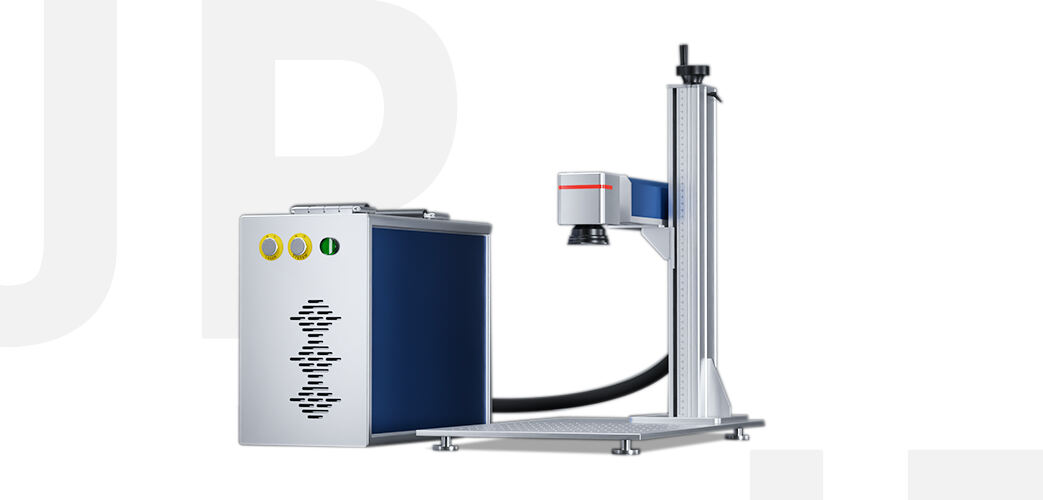
The durability of laser marking is determined by the laser type, material characteristics, marking depth, and surface deformation mechanism. The main marking modes include surface discoloration, micro-etching, melt re-solidification, and deep engraving. Different lasers exhibit different energy absorption characteristics on metals, plastics, glass, and organic materials; therefore, the durability varies accordingly.
I. Durability of Fiber Laser Marking
Fiber lasers typically operate at a wavelength of 1064 nm and are suitable for metal materials, offering high energy coupling efficiency on metal surfaces. Their main marking modes include oxide discoloration, surface melting, shallow engraving, and deep engraving.
1. Metal Materials
Stainless steel, carbon steel, aluminum, copper
Fiber lasers can achieve engraving depths of 0.01–0.5 mm (depending on power and scanning passes). Deep engraving is considered a permanent mark on metal materials and can theoretically last for the entire service life of the material, unaffected by friction, corrosion, or UV degradation.
Surface discoloration (such as black marking or color marking) is based on oxide-layer modification; its durability decreases under heavy wear or corrosive environments but remains stable for several years under normal conditions.
2. Plastic Materials
Fiber lasers cause carbonization, foaming, or discoloration reactions on plastics. Due to the thermal resistance limits of plastic substrates, the marking depth is usually less than 0.05 mm.
Durability depends on the plastic’s UV resistance and ambient temperature, generally lasting 3–10 years.
Long-term outdoor exposure may cause substrate aging, reducing the visibility of the mark.
II. Durability of UV Laser Marking
UV lasers operate at 355 nm and perform “cold processing,” suitable for polymers, glass, and some metals. The primary surface reaction is photochemical bond breaking with minimal heat-affected zone.
1. Plastic Materials
UV lasers produce high-contrast marks on plastics with uniform discoloration and fine character edges.
Marking depth is typically <0.02 mm.
Durability depends on the material’s resistance to photodegradation, generally lasting over 5–10 years.
UV lasers are not suitable for deep engraving; therefore, their abrasion resistance is lower than fiber laser deep engraving on metals.
2. Glass Materials
UV lasers can create micro-crack structures or shallow etching on glass surfaces with marking depths of approximately 0.005–0.03 mm.
This type of marking is permanent and does not fade over time.
Long-term stability is typical in optical glass, pharmaceutical glass, and electronic glass marking.
3. Metal Materials
UV lasers generate extremely shallow roughening or discoloration on metals, with limited depth.
Durability is insufficient for high-friction environments.
Commonly used for high-precision markings such as QR codes and serial numbers but not for deep engraving.
III. Durability of CO₂ Laser Marking
CO₂ lasers operate at 10.6 μm, with high absorption efficiency in organic materials. They are suitable for wood, leather, paper, glass, and ceramics.
1. Wood, Leather, Paper
The marking mechanism involves carbonization or ablation, with depths ranging from 0.1–1 mm.
These marks are permanent, but in high-friction or humid environments, aging of the material may cause the mark to fade.
In indoor conditions, they can remain stable for many years.
2. Glass
CO₂ lasers create a frosted effect on the glass surface through micro-fracturing.
This is a permanent mark and will not fade over time.
The roughened layer may be partially polished by strong mechanical friction but is difficult to remove completely.
3. Plastics
Plastics show large variations in absorption of CO₂ laser energy. Marking occurs through melting, vaporization, or discoloration.
Marking depth is shallow and durability depends on the aging rate of the plastic.
Compared with UV lasers, edge precision is lower, but durability is similar, generally about 3–10 years.
IV. Factors Affecting Marking Lifetime
1.Engraving depth: deep engraving > shallow engraving > surface discoloration.
2.Material absorption rate: higher absorption results in more stable marking.
3.Surface oxidation or coating properties: coatings may wear off, reducing mark durability.
4.Environmental factors: UV exposure, chemical corrosion, and mechanical abrasion reduce contrast.
5.Laser–material wavelength matching: correct wavelength selection improves marking stability.