
 EN
EN
 AR
AR
 BG
BG
 CS
CS
 DA
DA
 NL
NL
 FI
FI
 FR
FR
 DE
DE
 EL
EL
 IT
IT
 JA
JA
 KO
KO
 NO
NO
 PL
PL
 PT
PT
 RO
RO
 RU
RU
 ES
ES
 SV
SV
 TL
TL
 ID
ID
 LV
LV
 SR
SR
 SK
SK
 SL
SL
 UK
UK
 VI
VI
 SQ
SQ
 ET
ET
 HU
HU
 TH
TH
 TR
TR
 FA
FA
 GA
GA
 BE
BE
 AZ
AZ
 KA
KA
 LA
LA
 UZ
UZ
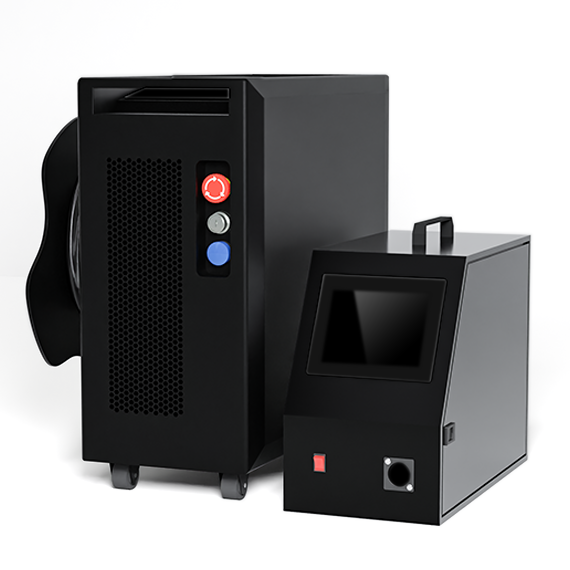
A solid-state relay is an electrical component that uses electronic devices for switching control and has core application value in the control system of handheld laser welding machines. The solid-state relay completes the on/off process through semiconductor devices and contains no mechanical contacts; therefore, it offers fast response, long service life, and strong vibration resistance, making it suitable for frequent switching operations in laser equipment.
I. Working Principle of Solid-State Relays
A solid-state relay consists of an optocoupler for isolation, power electronic devices, and a control circuit. Its basic operating process is as follows:
Input control signal:
The control system outputs a DC or AC low-voltage signal to the input terminal of the solid-state relay.
Optocoupler isolation:
The input signal is isolated through an optocoupler, achieving electrical isolation between the control side and the load side.
Driving power devices:
The output signal of the optocoupler drives the internal power semiconductor devices.
Switching action:
According to the control signal, the power device turns on or off, thereby controlling the power load inside the welding machine.
Because semiconductor components replace mechanical contacts, the solid-state relay has no contact wear and can achieve high-frequency, spark-free, and low-noise switching control.
II. Functions of Solid-State Relays in Handheld Laser Welding Machines
Laser power control
Solid-state relays are used to control the on/off state of the fiber laser power supply, providing start/stop control for the laser. Their fast response ensures stable laser startup and prevents voltage fluctuations from affecting the laser source.
Water chiller interlock control
Handheld laser welding machines require a water-cooling system to maintain laser temperature. Solid-state relays can power the water chiller in linkage with the system, ensuring the cooling system starts before the laser operates.
Welding gun trigger control
When the welding gun handle switch is triggered, the solid-state relay controls the on/off state of laser emission. Its fast switching improves laser response time, welding continuity, and operational stability.
Protection circuits and interlock systems
Solid-state relays are used for safety interlocks such as gas detection, water-flow detection, and cover detection. When an abnormal interlock signal occurs, the relay immediately cuts off the laser operating circuit, enhancing equipment safety.
High-frequency switching scenarios
Handheld welding involves frequent start/stop of laser output. The high-speed switching capability of solid-state relays meets these requirements and avoids failure issues common with mechanical relays under frequent operation.
III. Main Features of Solid-State Relays
Electrical isolation: Achieved through optocouplers, improving system safety.
Fast response: Typically in the microsecond range, meeting the fast-paced control requirements of laser welding.
Long service life and high reliability: No mechanical contacts, avoiding contact erosion and supporting long-term stable operation.
Strong anti-interference capability: Semiconductor structure ensures stable operation in the strong electromagnetic environment of laser welding.
No noise and no arcing: Prevents arc generation during switching, reducing interference with other electronic components and making it suitable for precision laser equipment