
 EN
EN
 AR
AR
 BG
BG
 CS
CS
 DA
DA
 NL
NL
 FI
FI
 FR
FR
 DE
DE
 EL
EL
 IT
IT
 JA
JA
 KO
KO
 NO
NO
 PL
PL
 PT
PT
 RO
RO
 RU
RU
 ES
ES
 SV
SV
 TL
TL
 ID
ID
 LV
LV
 SR
SR
 SK
SK
 SL
SL
 UK
UK
 VI
VI
 SQ
SQ
 ET
ET
 HU
HU
 TH
TH
 TR
TR
 FA
FA
 GA
GA
 BE
BE
 AZ
AZ
 KA
KA
 LA
LA
 UZ
UZ
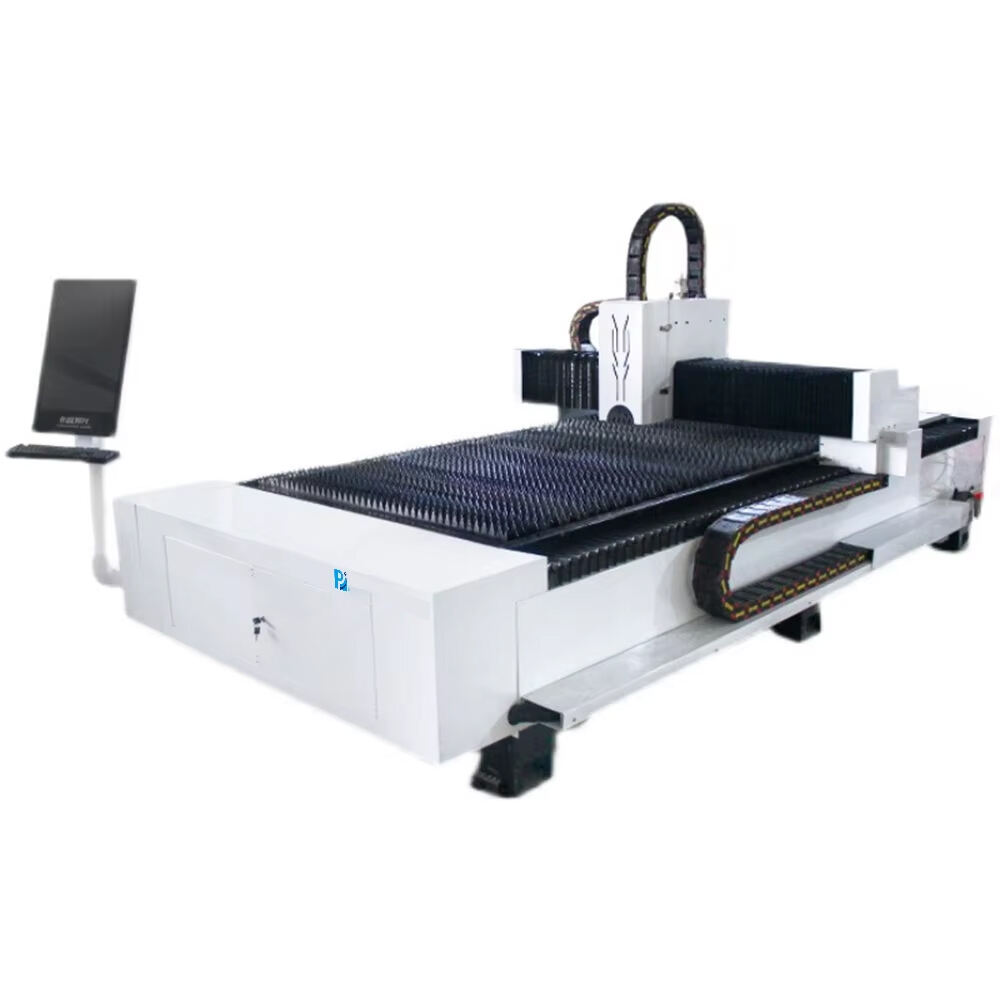
In laser cutting processes, focal length and nozzle height are two interrelated key process parameters. They directly affect laser energy distribution, molten pool stability, auxiliary gas performance, and final cutting quality. Proper matching of the focal position and nozzle height is a fundamental condition for ensuring cutting stability and cut edge quality.
I. Basic Definition and Function of Focal Length
Focal length refers to the distance between the focusing lens and the position where the laser beam forms its minimum spot after passing through the optical system. In cutting processes, the focal position is usually referenced to the workpiece surface as the zero point and can be classified into positive focus, zero focus, and negative focus.
The focal position determines the energy density distribution of the laser on the material surface or inside the material, directly affecting the following aspects:
Initial melting capability
Molten pool depth and morphology
Kerf width and taper
Size of the heat-affected zone
Excessive deviation of the focal position can result in insufficient or uneven energy density, leading to incomplete cutting, slag adhesion, or rough cut surfaces.
II. Basic Definition and Function of Nozzle Height
Nozzle height refers to the vertical distance between the nozzle tip and the workpiece surface and is usually controlled in real time by a height sensing system. The primary function of nozzle height lies in the auxiliary gas jet condition and the stability of airflow in the cutting zone.
An appropriate nozzle height can:
Ensure a stable, axisymmetric auxiliary gas flow
Improve the efficiency of molten metal removal
Reduce slag residue inside the kerf
Minimize spatter impact on the optical system
If the nozzle height is too large, the gas flow disperses and slag removal capability decreases. If the nozzle height is too small, it may cause nozzle collision, spatter adhesion, and airflow turbulence.
III. Coupling Relationship Between Focal Length and Nozzle Height
Focal length and nozzle height are not independent parameters. In actual cutting processes, there is a clear coupling relationship between them.
Influence of Focal Position Changes on Optimal Nozzle Height
When the focal position moves downward (deeper negative focus), the molten pool extends further into the material. In this case, the nozzle height usually needs to be reduced appropriately to enhance the direct effect of auxiliary gas on the molten metal.
Influence of Nozzle Height Changes on Focal Energy Utilization
Changes in nozzle height affect gas pressure distribution, indirectly altering molten pool morphology and the laser–material interaction region, thereby influencing effective utilization of focal energy.
Influence of Parameter Matching on Cutting Stability
Improper matching of focal length and nozzle height can easily cause molten pool instability during cutting, which may appear as periodic kerf striations, bottom slag adhesion, or cutting interruptions.
IV. Parameter Matching Characteristics Under Different Material Conditions
Thin Sheet Cutting
A near-zero focus or slight positive focus is typically used, combined with a small nozzle height, to achieve a narrow kerf and high cutting speed.
Medium and Thick Plate Cutting
Negative focus cutting is commonly adopted, with a relatively reduced nozzle height to enhance molten pool depth and auxiliary gas slag removal capability.
High-Reflectivity Material Cutting
Precise control of the focal position is required while maintaining a stable nozzle height to prevent energy fluctuations and reduce the risk of back reflection.
V. Common Cutting Defects and Parameter Correlation
Incomplete cutting: focal position too high or nozzle height too large
Bottom slag adhesion: insufficient negative focus or excessive nozzle height
Excessive kerf width: overly positive focus or nozzle height too low
Rough cut surface: improper matching of focal length and nozzle height, resulting in unstable interaction between gas flow and molten pool
VI. Process Optimization Recommendations
Focal length adjustment should be primarily determined based on material thickness
Nozzle height should be kept as close to the workpiece as possible while ensuring operational safety
During parameter tuning, focal length and nozzle height should be adjusted simultaneously rather than independently
Trial cutting should be used to observe kerf shape and cut surface quality to gradually determine the optimal parameter combination
Focal length and nozzle height are key parameters in laser cutting that mutually constrain and influence each other. Their proper matching directly determines laser energy utilization efficiency, molten pool stability, and cutting quality. In practical applications, focal length and nozzle height should be systematically adjusted according to material type, thickness, and process objectives to achieve stable and repeatable cutting results.