 EN
EN
 AR
AR
 BG
BG
 CS
CS
 DA
DA
 NL
NL
 FI
FI
 FR
FR
 DE
DE
 EL
EL
 IT
IT
 JA
JA
 KO
KO
 NO
NO
 PL
PL
 PT
PT
 RO
RO
 RU
RU
 ES
ES
 SV
SV
 TL
TL
 ID
ID
 LV
LV
 SR
SR
 SK
SK
 SL
SL
 UK
UK
 VI
VI
 SQ
SQ
 ET
ET
 HU
HU
 TH
TH
 TR
TR
 FA
FA
 GA
GA
 BE
BE
 AZ
AZ
 KA
KA
 LA
LA
 UZ
UZ
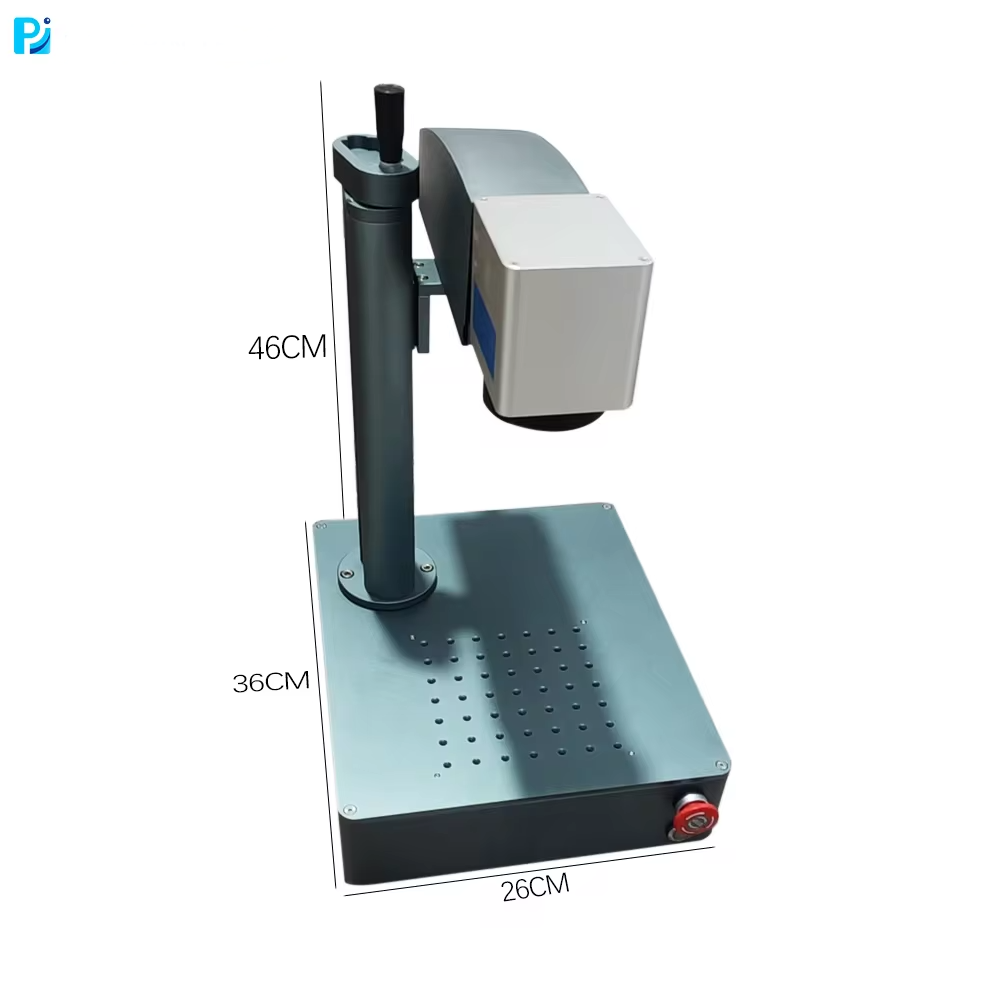
The galvanometer system in a laser marking machine is used to control the movement direction of the laser beam, thereby achieving precise positioning for laser marking. Based on the performance and control accuracy of the galvanometer, laser marking machines can be divided into two types: those using ordinary galvanometers and those using high-speed galvanometers. Although their basic working principles are similar, due to the technical differences of the galvanometers, there are significant differences in response speed, accuracy, and stability between the two types.
1. Mirror type and basic working principle
Ordinary Mirror: An ordinary mirror generally refers to the conventional laser marking machine mirror system. It is usually driven by standard servo motors and stepper motors, capable of achieving two-dimensional scanning of the laser beam. The mirror rotates the mirror surface to change the direction of the laser beam, thereby precisely positioning the laser on the area to be marked.
High-speed galvanometer: The high-speed galvanometer employs a more advanced drive system (such as high-precision servo motors, fast-response motors, etc.), through optimizing the control system and mechanical structure, to provide higher galvanometer rotation speed and faster response time. The design purpose of the high-speed galvanometer is to achieve higher speed for marking, especially in scenarios requiring high-speed and high-frequency operations.
2. Response speed and accuracy
Common Mirrors: The response speed of common mirrors is relatively low, and they are typically suitable for low to medium-speed marking applications. Their accuracy is relatively high, but due to the long response time, the marking speed is somewhat limited. The scanning frequency of common mirrors is generally low, so when handling large-scale or high-frequency marking tasks, they may not be able to achieve the required efficiency.
High-speed galvanometer: The response speed of the high-speed galvanometer is significantly faster, enabling it to support higher scanning frequencies. The high-speed galvanometer can change the direction of the laser beam in a short period of time, thereby greatly increasing the speed of laser marking. The high-speed galvanometer not only improves the marking speed but also maintains high accuracy during high-speed movement, making it suitable for applications with high speed requirements, such as marking on electronic components and automotive parts.
3. Scope of Application and Application Scenarios
Ordinary Mirrors: Ordinary mirrors are widely used in fields where the marking speed requirements are not high, such as marking on metals, plastics, and woods. They are suitable for medium and low-speed production lines and single-piece small-batch marking, and can meet the requirements of higher precision but lower speed demands.
High-speed galvanometer: High-speed galvanometers are typically used in industrial production environments that require high-speed and high-precision marking. Especially in mass production and precision processing fields, they can significantly enhance production efficiency. Common applications include laser marking of mobile phone accessories, automotive parts, LED components, electronic components, etc.
4. Structure and Design
Common Mirrors: The design of common mirrors is relatively simple, with a stable structure and low cost. Due to the limitations of their application fields, common mirrors have lower requirements for speed and accuracy. Therefore, the design of their driving systems and control systems does not need to be particularly complex.
High-speed galvanometer: The design of high-speed galvanometers is more complex. They usually employ high-performance servo motors and precise mechanical structures to ensure high stability and accuracy during high-speed operation. Moreover, the control system of high-speed galvanometers is also more advanced, requiring support for high-speed data transmission and real-time processing to meet the requirements of high-speed marking.
5. Power and Thermal Management
Common Mirrors: When operating at low speeds, the power and heat output of the laser are relatively low, and the thermal management requirements are relatively low. Usually, no particularly complex cooling systems are needed. However, in some high-power applications, the cooling design of common mirrors may become a limiting factor.
High-speed galvanometer: Due to the need to operate at high speeds, high-speed galvanometers generate a lot of heat and have high power requirements, especially when working at high frequency for long periods. To ensure the stable operation of the system, high-speed galvanometers are usually equipped with more efficient cooling systems to prevent performance degradation due to overheating.
6. Stability and Anti-interference Capability
Ordinary galvanometer: Due to its lower working speed, the stability of the ordinary galvanometer system is better, and its anti-interference ability is relatively stronger. Under a stable working environment, the ordinary galvanometer can provide high marking accuracy and repeatability, and is suitable for production lines that do not require high-frequency and long-duration marking.
High-speed galvanometer: Due to its high working frequency, the high-speed galvanometer has more stringent requirements for the stability and anti-interference ability of the system. The control system of the high-speed galvanometer needs to handle more complex signals and maintain accuracy during high-speed movement. Therefore, it requires higher anti-interference ability and more precise mechanical design to ensure no errors or distortions occur during the high-speed marking process.
The main differences between ordinary galvanometer mirrors and high-speed galvanometer mirrors lie in aspects such as response speed, accuracy, application scope, structural design, and cost. High-speed galvanometer mirrors are suitable for high-speed and high-precision marking tasks and can meet higher production efficiency and accuracy requirements.