
 EN
EN
 AR
AR
 BG
BG
 CS
CS
 DA
DA
 NL
NL
 FI
FI
 FR
FR
 DE
DE
 EL
EL
 IT
IT
 JA
JA
 KO
KO
 NO
NO
 PL
PL
 PT
PT
 RO
RO
 RU
RU
 ES
ES
 SV
SV
 TL
TL
 ID
ID
 LV
LV
 SR
SR
 SK
SK
 SL
SL
 UK
UK
 VI
VI
 SQ
SQ
 ET
ET
 HU
HU
 TH
TH
 TR
TR
 FA
FA
 GA
GA
 BE
BE
 AZ
AZ
 KA
KA
 LA
LA
 UZ
UZ
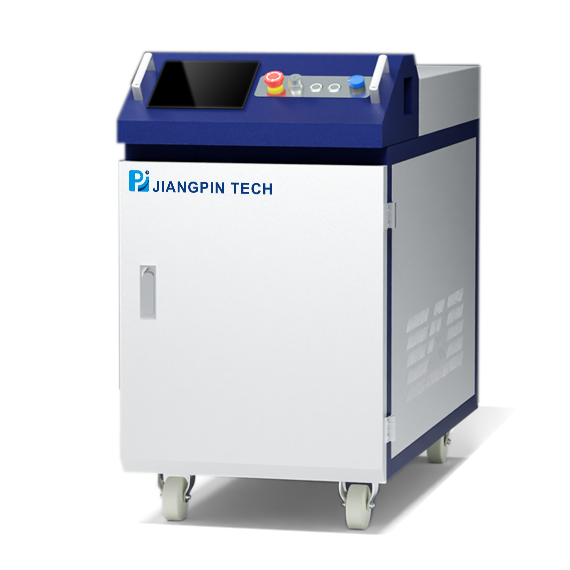
QCW (Quasi-Continuous Wave) laser welding machines represent a class of laser welding equipment whose operating characteristics fall between continuous-wave lasers and traditional pulsed lasers. By combining high peak power with relatively long pulse durations, QCW lasers offer distinct advantages in thin-sheet welding, precision welding, and applications sensitive to heat input. This article provides a systematic analysis of the working modes of QCW laser welding machines and their typical application scenarios.
1. Basic Working Principle of QCW Laser Welding Machines
QCW laser sources are driven in a pulsed manner, but each pulse has a longer duration and a higher repetition frequency. As a result, the laser output exhibits quasi-continuous behavior over time. Compared with short-pulse lasers, QCW lasers deliver higher peak power and more concentrated energy. Compared with continuous-wave lasers, they allow better control of heat input while maintaining high instantaneous energy density.
During the welding process, the laser beam is transmitted through an optical fiber and focused onto the workpiece surface. The material rapidly melts within a short time to form a stable molten pool. Heat input is regulated through pulse intervals, enabling a smaller heat-affected zone (HAZ) and improved weld seam formation.
2. Main Working Modes of QCW Laser Welding Machines
2.1 Single-Pulse Welding Mode
In single-pulse mode, the laser outputs individual pulses with preset energy, making it suitable for spot welding and micro-welding applications. Energy can be precisely controlled, ensuring consistent weld spot size and high repeatability. This mode is ideal for applications with stringent precision requirements.
Characteristics:
Controlled heat input
High weld spot consistency
Minimal material deformation
2.2 Multi-Pulse Overlapping Welding Mode
In multi-pulse mode, the laser outputs a series of pulses continuously. Weld seam extension is achieved through pulse overlap, forming a continuous weld bead. This mode balances welding efficiency and thermal control and is suitable for short to medium-length weld seams.
Characteristics:
Good weld continuity
Stable molten pool behavior
Suitable for thin-sheet lap welding
2.3 Quasi-Continuous Welding Mode
In quasi-continuous mode, higher pulse frequencies and extended pulse widths are applied, resulting in laser output that closely resembles continuous-wave operation on a macroscopic scale. This mode maintains high peak power while reducing sustained heat input, making it suitable for applications with strict requirements on heat-affected zones.
Characteristics:
High peak power
Reduced heat-affected zone
Uniform weld seam formation
3. Typical Application Scenarios of QCW Laser Welding Machines
3.1 Thin Metal Sheet Welding
QCW laser welding machines are particularly suitable for welding thin materials such as stainless steel, carbon steel, galvanized steel, and aluminum alloys. High instantaneous power enables rapid material penetration, while controlled heat input helps prevent defects such as burn-through and excessive collapse.
3.2 Precision Component Welding
In applications involving electronic components, sensors, medical devices, and precision mechanical parts, QCW lasers enable localized welding with minimal thermal impact, reducing the risk of heat damage to surrounding sensitive components.
3.3 Handheld Laser Welding Applications
QCW laser welding machines are widely used in handheld welding systems. Their stable energy output and relatively low overall power consumption make them suitable for short weld seams, intermittent welding, and on-site operations, improving operator usability and flexibility.
3.4 Welding Applications Sensitive to Thermal Deformation
For workpieces with strict flatness requirements or materials prone to deformation—such as thin-walled structures and small metal assemblies—the pulse modulation capability of QCW lasers helps control molten pool cooling behavior and reduce welding-induced stress concentration.
4. Summary of Application Advantages of QCW Laser Welding Machines
Output characteristics between continuous-wave and pulsed lasers, offering strong process adaptability
High peak power for rapid ignition and stable molten pool formation
Adjustable heat input with a small heat-affected zone
Particularly suitable for thin-sheet, precision, and handheld welding applications
By offering flexible working modes, QCW laser welding machines achieve an effective balance between welding efficiency and weld quality. In thin-sheet welding, precision welding, and applications with strict thermal control requirements, QCW laser welding machines demonstrate excellent process adaptability. Proper selection of working modes and optimized parameter matching are key to fully realizing their performance advantages.