
 EN
EN
 AR
AR
 BG
BG
 CS
CS
 DA
DA
 NL
NL
 FI
FI
 FR
FR
 DE
DE
 EL
EL
 IT
IT
 JA
JA
 KO
KO
 NO
NO
 PL
PL
 PT
PT
 RO
RO
 RU
RU
 ES
ES
 SV
SV
 TL
TL
 ID
ID
 LV
LV
 SR
SR
 SK
SK
 SL
SL
 UK
UK
 VI
VI
 SQ
SQ
 ET
ET
 HU
HU
 TH
TH
 TR
TR
 FA
FA
 GA
GA
 BE
BE
 AZ
AZ
 KA
KA
 LA
LA
 UZ
UZ
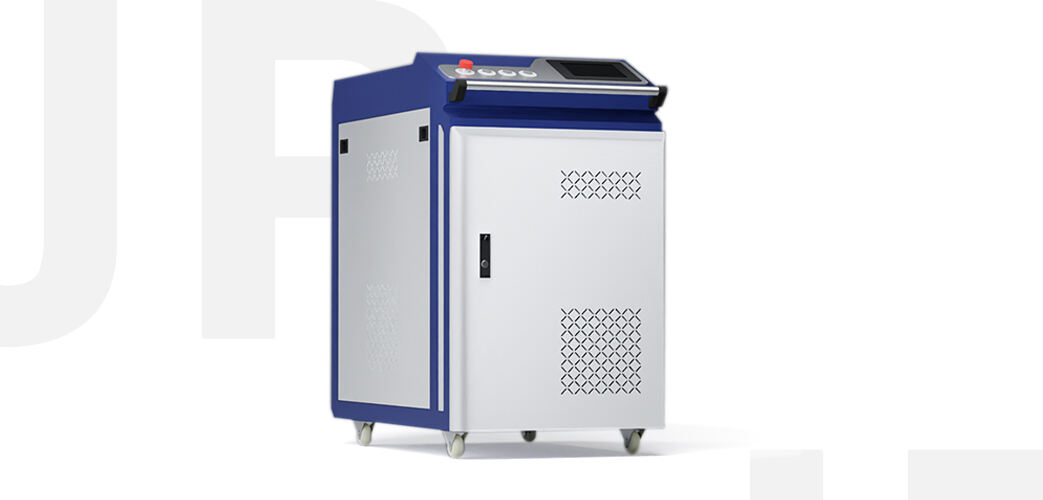
In laser welding, the laser beam is focused by an optical system onto the surface or interior of the workpiece, forming a region with high energy density. The depth of focus (DOF), as a key parameter describing the spatial energy distribution of the laser beam, has a direct influence on molten pool formation, energy coupling behavior, and overall welding stability. Understanding the relationship between depth of focus and welding stability is essential for optimizing the laser welding process window.
1. Definition and Physical Meaning of Depth of Focus
Depth of focus (DOF) refers to the axial range along the laser propagation direction within which the focused spot size remains within an acceptable variation range. It is commonly defined as the distance over which the spot diameter increases to a specified multiple (such as 1.2 or 1.5 times) of the minimum spot diameter.
From an optical perspective, the depth of focus is mainly affected by the following factors:
Laser wavelength
Focal length of the focusing lens
Beam quality (M² factor)
Initial beam diameter
A larger depth of focus results in a more gradual axial energy distribution, while a smaller depth of focus leads to higher energy concentration but greater sensitivity to positional deviations.
2. Basic Concept of Welding Stability
Welding stability generally refers to the consistency of molten pool behavior, energy input, and weld seam formation during the welding process. Under stable welding conditions, weld width, penetration depth, spatter behavior, and plasma state remain relatively constant.
Key factors influencing welding stability include:
Laser power and power fluctuations
Focus position deviation
Workpiece fixturing and surface flatness
Welding speed
Shielding gas conditions
Among these factors, small deviations in focus position are often amplified through the depth of focus, significantly affecting welding stability.
3. Mechanisms by Which Depth of Focus Influences Welding Stability
3.1 Depth of Focus and Focus Position Tolerance
In practical production, variations in workpiece height, thermal deformation, and fixturing errors are unavoidable. When the depth of focus is large, moderate focus position deviations result in relatively small changes in spot size and energy density, allowing the molten pool to remain stable.
In contrast, systems with a small depth of focus are highly sensitive to focus position changes. Even minor deviations can cause significant fluctuations in energy density, leading to inconsistent penetration depth, irregular weld width, or defects such as lack of fusion or burn-through.
3.2 Influence of Depth of Focus on Molten Pool Dynamic Stability
A laser beam with a larger depth of focus exhibits a smoother axial energy distribution. As a result, the molten pool responds more slowly to energy disturbances, which helps suppress molten pool oscillations and spatter formation.
When the depth of focus is small, energy is concentrated in a narrow region, producing steep temperature gradients within the molten pool. This enhances metal vaporization and recoil pressure fluctuations, increasing the likelihood of molten pool instability, weld bead fluctuation, and spatter generation.
3.3 Depth of Focus and Process Robustness
In automated or high-speed laser welding applications, tolerance to external disturbances is particularly important. A larger depth of focus improves process robustness, making the welding process less sensitive to assembly tolerances, thermal distortion, and mechanical vibration, thereby enhancing overall welding consistency.
4. Applicability of Depth of Focus in Different Welding Modes
4.1 Conduction Welding Mode
In conduction-mode welding under low power density conditions, a larger depth of focus contributes to more uniform heat input and smoother weld surface formation. This configuration offers good stability and is suitable for thin-sheet welding and precision applications.
4.2 Keyhole Welding Mode
Keyhole welding relies on high power density to form and maintain a stable vapor capillary. In this mode, an excessively large depth of focus may reduce peak energy density, making keyhole formation more difficult, while an excessively small depth of focus increases sensitivity to focus position errors. Therefore, a balanced design between energy density and focus tolerance is required.
5. Engineering Significance of Depth of Focus Optimization
In practical process design, depth of focus should not be maximized or minimized indiscriminately. Instead, it must be optimized based on material type, thickness range, welding speed, and system accuracy. By properly selecting the focal length, controlling beam quality, and matching welding parameters, it is possible to maintain sufficient energy density while improving welding stability and consistency.
Depth of focus is a critical parameter linking laser optical characteristics with welding process stability. A larger depth of focus enhances tolerance to focus position deviations and external disturbances, thereby improving welding stability. Conversely, a smaller depth of focus enables higher energy density but imposes stricter requirements on system precision. Achieving a proper balance between depth of focus and energy concentration is essential for stable and high-quality laser welding.