
 EN
EN
 AR
AR
 BG
BG
 CS
CS
 DA
DA
 NL
NL
 FI
FI
 FR
FR
 DE
DE
 EL
EL
 IT
IT
 JA
JA
 KO
KO
 NO
NO
 PL
PL
 PT
PT
 RO
RO
 RU
RU
 ES
ES
 SV
SV
 TL
TL
 ID
ID
 LV
LV
 SR
SR
 SK
SK
 SL
SL
 UK
UK
 VI
VI
 SQ
SQ
 ET
ET
 HU
HU
 TH
TH
 TR
TR
 FA
FA
 GA
GA
 BE
BE
 AZ
AZ
 KA
KA
 LA
LA
 UZ
UZ
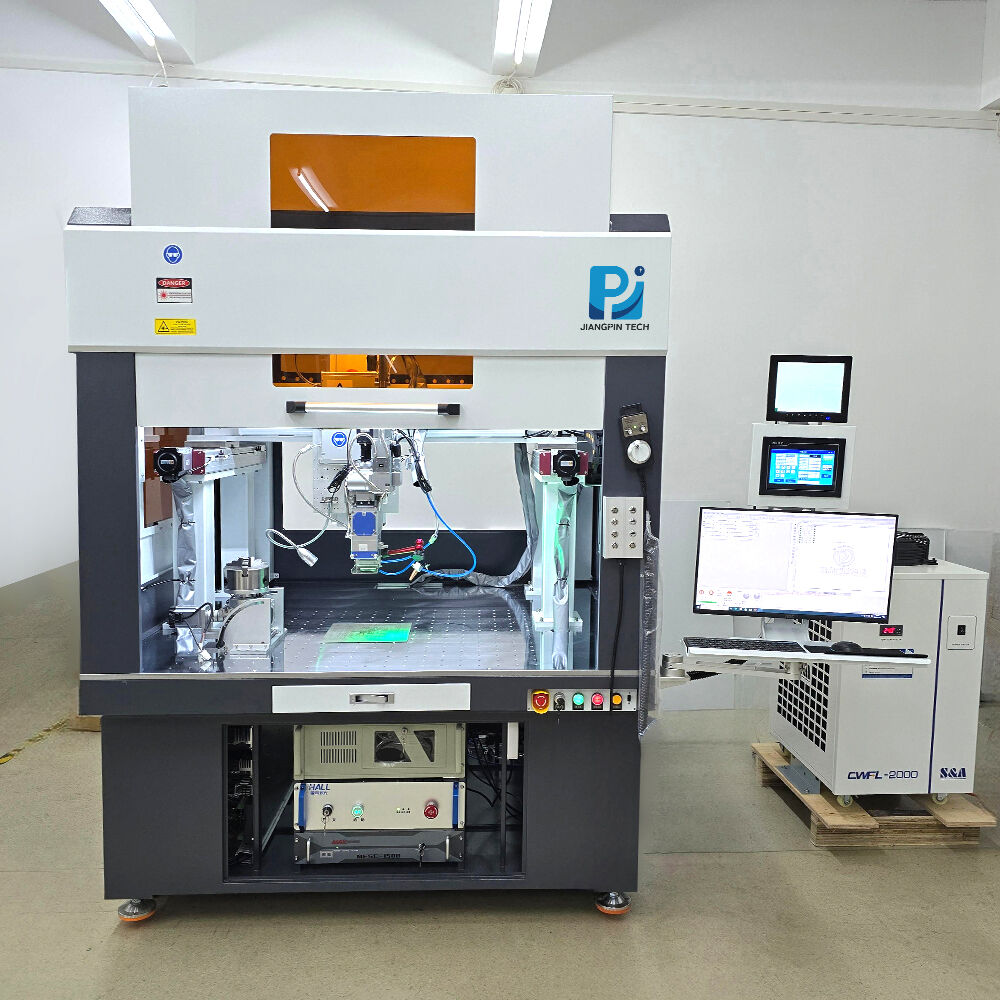
Laser welding equipment can be divided by operating method and structural form into two main types: desktop laser welding machines and handheld laser welding machines. The two types of equipment show significant technical differences in structural design, welding control methods, process stability, and applicable industry scenarios. The following analysis is made from an engineering perspective, combined with related products from Jiangpin Tech.
1. Differences in Structure and Installation Method
Desktop laser welding machines adopt a fixed frame and welding platform structure, typically including the laser source, optical modules, clamping fixtures, motion system, and cooling system. The workpiece is fixed on the platform, and positioning accuracy is ensured through fixtures or tooling. The desktop structure provides high rigidity and stability, suitable for repetitive process scenarios.
Handheld laser welding machines adopt a structure consisting of a laser source with fiber transmission, and welding is performed by the operator holding the welding gun. They do not rely on large worktables, require no complex installation, and can be used directly on site. Fiber transmission provides flexibility in space, and the overall system is more mobile.
Jiangpin Tech’s desktop welding system adopts an integrated platform with precision fixtures and optional galvanometer modules for small precision parts welding. Its handheld welding system uses a lightweight welding gun, flexible fiber, and mobile cabinet structure, suitable for construction sites, factory workshops, and metal fabrication environments.
2. Differences in Welding Process Stability
The process stability of desktop welding mainly comes from fixed optics and fixed workpiece positioning, ensuring consistent weld point location, uniform weld seam size, and stable heat input. Its repetitive welding performance is superior to handheld equipment, making it suitable for batch and precision welding tasks such as stainless steel housings, small hardware components, and hermetic sealing.
Handheld welding is affected by manual operation, and weld trajectory, speed, and filler feeding depend on the operator’s skill. It is more difficult to achieve the process consistency of desktop systems, but it is suitable for plate joining, rework, and repair where high precision is not required. In sheet metal applications, handheld welding offers high speed, reduced grinding work, and no workstation limitations.
Jiangpin Tech’s desktop welding systems are oriented toward precision industries, while handheld systems target sheet metal fabrication, railing production, stainless steel cabinets, and aluminum repair scenarios.
3. Differences in Control System and Motion Method
Desktop laser welding machines may integrate CNC worktables or galvanometer scanning modules. Welding paths can be programmed to achieve repeatable trajectory control and consistent weld dimensions. Some systems may include CCD visual positioning for fine weld seams or sealing applications.
Handheld laser welding machines do not include CNC motion systems; welding paths are controlled manually by the operator. To improve seam quality, handheld welding guns commonly include oscillation heads, allowing adjustment of oscillation frequency and width to achieve gap compensation and weld formation optimization.
Jiangpin Tech’s desktop welding supports visual positioning and trajectory control, while its handheld systems offer digital parameter settings and oscillation mode switching for intuitive sheet metal operation.
4. Differences in Laser Output Mode and Material Compatibility
Desktop welding equipment can be configured with pulsed or continuous laser sources. Pulsed lasers are suitable for micro weld spots and small components requiring strict heat input control. Continuous lasers are suitable for deep penetration welding or thicker materials. Material compatibility covers consumer electronics hardware, sensors, medical devices, and precision instrument components.
Handheld welding equipment typically uses continuous fiber lasers to balance welding efficiency and mobility. With oscillation welding, it achieves wide weld seam coverage, suitable for stainless steel, carbon steel, and aluminum plate joining and repair.
Jiangpin Tech’s desktop welding can be equipped with pulsed or continuous lasers for both structural and electronic hardware applications. Its handheld welding system uses continuous lasers for sheet metal and on-site welding tasks.
5. Differences in Processing Requirements and Applicable Industries
Desktop welding has higher pre-processing requirements, including good edge preparation, minimal gaps, and precise positioning. It is suitable for industries such as consumer electronics, precision instruments, automotive components, and medical devices where stable, batch production is required.
Handheld welding has more flexible pre-processing requirements, and weld gaps or positioning deviations can be compensated through oscillation welding or filler wire. Applicable industries include sheet metal fabrication, metal door and window production, hardware products, kitchen stainless steel equipment, and installation engineering.
Jiangpin Tech uses the two types of equipment to cover both precision manufacturing plants and sheet metal fabrication scenarios, forming a differentiated product lineup.
6. Differences in Operator Skill Requirements
Desktop welding generally requires operators familiar with equipment programming and fixture operation. The workstation is fixed, and the learning cycle is longer.
Handheld welding has a shorter learning cycle and is suitable for field technicians. Parameter adjustment is simple, with focus on movement speed and seam observation.
In software design, Jiangpin Tech uses parameterized and automated solutions for desktop systems, while handheld systems adopt preset parameters and quick process calls.
Desktop laser welding machines are better suited for high-precision, high-consistency, and batch production applications. Handheld laser welding machines are better suited for flexible operations, on-site processing, and structural welding tasks. By developing both desktop and handheld welding products, Jiangpin Tech covers application scenarios ranging from precision electronics to sheet metal fabrication, forming a product system that meets different customer needs.