
 EN
EN
 AR
AR
 BG
BG
 CS
CS
 DA
DA
 NL
NL
 FI
FI
 FR
FR
 DE
DE
 EL
EL
 IT
IT
 JA
JA
 KO
KO
 NO
NO
 PL
PL
 PT
PT
 RO
RO
 RU
RU
 ES
ES
 SV
SV
 TL
TL
 ID
ID
 LV
LV
 SR
SR
 SK
SK
 SL
SL
 UK
UK
 VI
VI
 SQ
SQ
 ET
ET
 HU
HU
 TH
TH
 TR
TR
 FA
FA
 GA
GA
 BE
BE
 AZ
AZ
 KA
KA
 LA
LA
 UZ
UZ
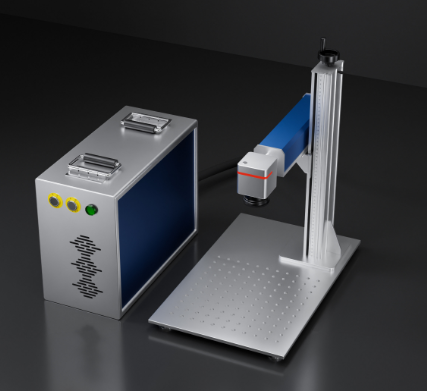
Ultraviolet (UV) laser systems belong to the category of short-wavelength solid-state lasers. In industrial applications, the most common output wavelength is 355 nm, which falls within the ultraviolet spectrum. Within laser processing technologies, UV lasers are generally classified as precision light sources. Compared with conventional 1064 nm infrared fiber lasers, ultraviolet lasers interact with materials through a distinctly different mechanism. Infrared lasers primarily rely on thermal melting or thermal ablation to remove material, whereas UV lasers, due to their higher photon energy, are more capable of breaking molecular bonds directly. As a result, UV processing is characterized predominantly by photochemical effects rather than purely thermal effects. This fundamental difference has established UV lasers as a stable and irreplaceable solution in high-precision, low-heat-impact applications.
From the perspective of beam generation, industrial UV lasers do not directly oscillate at 355 nm. Instead, they are produced through frequency conversion of an ინფared solid-state laser source. The typical technical pathway involves generating a 1064 nm fundamental infrared beam, passing it through nonlinear optical crystals for second-harmonic generation to obtain 532 nm green light, and then performing an additional frequency conversion stage to achieve third-harmonic generation, resulting in 355 nm ultraviolet output. This process is known as third-harmonic generation. As frequency increases and wavelength shortens, the energy of individual photons rises significantly. During material processing, these high-energy UV photons can directly disrupt molecular bonds without requiring substantial heat accumulation. Consequently, thermal diffusion remains limited, machining edges are sharper, and surrounding material experiences minimal thermal influence.
In terms of performance characteristics, UV lasers demonstrate strong control over the heat-affected zone. Because energy is concentrated within a very small interaction area, heat conduction to adjacent regions is limited and overall temperature rise is reduced. In practical applications, this results in smooth cutting edges, minimal material warping, reduced carbonization and yellowing, and lower surface residue. Such properties are especially critical when processing thin films, polymers, and microelectronic components, which are typically sensitive to temperature fluctuations.
Furthermore, the 355 nm wavelength is significantly shorter than the standard 1064 nm infrared wavelength. Under identical optical system conditions, a shorter wavelength enables a smaller theoretical focal spot. This leads to higher processing resolution, finer line widths, clearer graphical details, and enhanced micro-structure formation capability. For this reason, UV lasers are widely applied in high-density marking and precision structural machining. Regarding material absorption, certain transparent materials and polymers exhibit relatively low absorption rates in the infrared spectrum but much higher absorption efficiency in the ultraviolet range. Improved absorption enhances energy utilization, reduces reflection losses, and contributes to greater processing stability.
From a surface quality standpoint, UV laser processing typically does not produce significant molten buildup. The resulting edges are clean, with well-defined contours and improved overall appearance. This is particularly important for products requiring high cosmetic standards. Accordingly, UV lasers are extensively used in precision marking applications, including medical device housings, electronic component coding, cosmetic packaging, and food-grade plastic container labeling. On plastic substrates, UV lasers can generate high-contrast marks while avoiding burn marks and melted edges.
In electronics manufacturing, UV lasers are commonly used for PCB surface marking, flexible circuit board cutting, micro-drilling, and semiconductor packaging structure processing. The low thermal impact helps maintain circuit integrity and reduces the risk of substrate deformation. When processing ultra-thin glass or other brittle materials, UV lasers can help minimize crack propagation and improve edge integrity, delivering stable performance in fine contour cutting. In thin-film and micro-structure processing, materials such as PET and PI exhibit clean edges and good burr control under ultraviolet irradiation, making UV lasers suitable for manufacturing miniature components and precision structures.
Overall, ultraviolet laser systems achieve short-wavelength output through frequency multiplication technology. Their core advantages stem from high photon energy and controllable low thermal diffusion characteristics. In applications that demand precision machining, minimized heat impact, or the processing of polymers and brittle materials, UV laser systems offer clear technical value and have become an important light source within modern precision manufacturing