
 EN
EN
 AR
AR
 BG
BG
 CS
CS
 DA
DA
 NL
NL
 FI
FI
 FR
FR
 DE
DE
 EL
EL
 IT
IT
 JA
JA
 KO
KO
 NO
NO
 PL
PL
 PT
PT
 RO
RO
 RU
RU
 ES
ES
 SV
SV
 TL
TL
 ID
ID
 LV
LV
 SR
SR
 SK
SK
 SL
SL
 UK
UK
 VI
VI
 SQ
SQ
 ET
ET
 HU
HU
 TH
TH
 TR
TR
 FA
FA
 GA
GA
 BE
BE
 AZ
AZ
 KA
KA
 LA
LA
 UZ
UZ
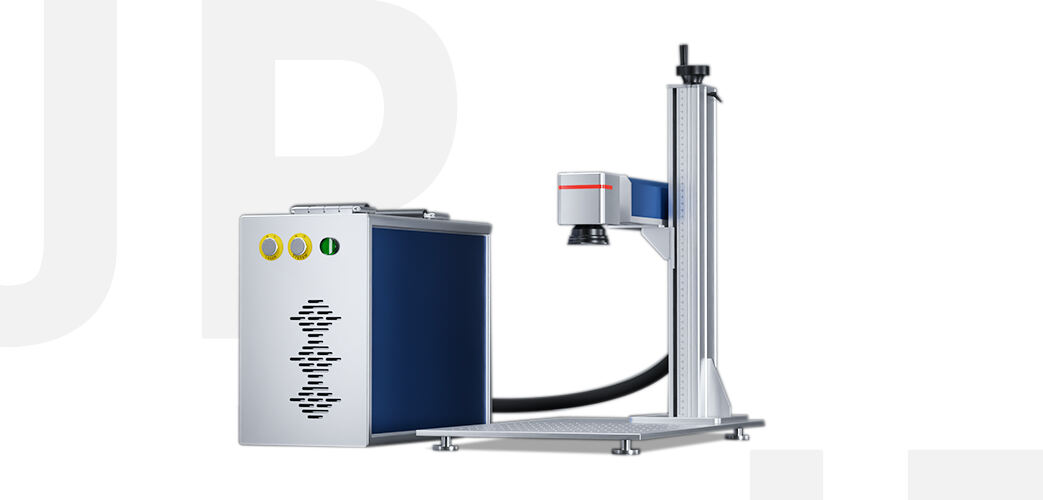
— A Systematic Analysis of Declining Laser Energy Coupling Efficiency
Under stable mass-production conditions, laser marking quality normally shows good repeatability.
If, without obvious process changes, the mark color becomes lighter, the contrast decreases, or the engraving depth is insufficient, it often indicates that the effective coupling efficiency of laser energy to the material surface is declining.
This degradation rarely originates from a single component failure. More commonly, it is the combined result of multiple factors involving the laser source, beam delivery, focusing condition, material response, and control parameters.
Without a systematic diagnostic approach, operators often try to “compensate” simply by increasing power. In most cases, this only temporarily masks the problem and may even introduce new instabilities.
This article analyzes the causes of fading marks from three dimensions: energy generation, energy transmission, and material absorption.
1. Degradation of Laser Source Output Capability
After long-term operation, a laser inevitably experiences a reduction in average power or insufficient pulse energy. The essence of this change is a decline in conversion efficiency caused by gain medium degradation or pump module aging.
When the energy delivered per pulse falls below the material’s reaction threshold, only slight discoloration occurs instead of forming a stable oxide layer or ablation depth.
In engineering practice, the most reliable method is not observing the processing result, but establishing a power baseline measurement mechanism.
By periodically recording output with a power meter and comparing it to the initial calibration data, one can quickly determine whether the issue originates from the source.
If the actual output is already below the rated range, increasing the percentage in software is merely overdrawing the laser lifetime rather than solving the problem.
2. Reduced Energy Density Caused by Focus Shift
In an optical system, the focal position determines the power density per unit area.
Small variations in workpiece height, fixture accuracy, or lens installation can change the spot size, effectively “diluting” the energy distribution.
Typical symptoms include:
edges becoming loose, lines slightly thicker, yet the color becoming lighter.
This is not insufficient power; the beam is simply no longer located at the minimum confusion spot.
Re-establishing the focus baseline is often more effective than raising power.
For mass production, maintaining consistent Z-axis reference and fixture repeatability is critical.
3. Energy Loss in the Beam Delivery Path
Theoretical output power is not equal to the effective power reaching the workpiece.
Any contamination on optical interfaces leads to absorption and scattering, thereby reducing transmittance.
In metal marking environments, fumes and condensates easily attach to the field lens or protective window, forming an energy barrier that is difficult to detect visually.
The result:
the control system appears normal, but the material response becomes weaker.
Therefore, defining a lens transmittance maintenance cycle is more valuable than repeatedly modifying parameters.
From field service experience, many “power attenuation” cases are ultimately confirmed as optical contamination.
4. Reduced Energy per Unit Area Due to Parameter Structure Changes
Marking depth fundamentally depends on the accumulated energy per unit area.
When scanning speed increases, hatch spacing enlarges, or frequency combinations change, the dwell time per point is reduced.
Even if the power percentage remains unchanged, the total energy received by the material decreases.
This explains why different files may produce different depths — because the process model has changed.
Mature production systems typically store validated parameter templates instead of relying on operator memory.
5. Fluctuation in Material Absorptivity
Materials are not ideal standardized bodies.
Variations in alloy composition, surface roughness, oxidation state, or cleanliness can alter absorption at a specific wavelength.
Changes in absorptivity directly manifest as differences in marking contrast.
When reflectivity increases, the result may appear lighter even if the equipment operates perfectly.
For products requiring high consistency, incoming material stability management is as important as process parameters.
6. Changes in Dynamic System Accuracy
Galvanometer zero drift or slight beam path deviation can redistribute energy across the working field.
In such cases, differences between central and edge areas become amplified.
Standard test patterns can quickly reveal this issue.
If systematic variations in depth exist across regions, recalibration of the scanning system should be considered.
7. Stability Influenced by Temperature and Power Supply
Lasers are highly sensitive to thermal conditions.
Reduced cooling efficiency or elevated ambient temperature may push the output into a non-optimal operating region.
These problems often show a time characteristic — normal at startup, gradually fading during continuous operation.
When this pattern is observed, the thermal management system should be checked before adjusting process parameters.