 EN
EN
 AR
AR
 BG
BG
 CS
CS
 DA
DA
 NL
NL
 FI
FI
 FR
FR
 DE
DE
 EL
EL
 IT
IT
 JA
JA
 KO
KO
 NO
NO
 PL
PL
 PT
PT
 RO
RO
 RU
RU
 ES
ES
 SV
SV
 TL
TL
 ID
ID
 LV
LV
 SR
SR
 SK
SK
 SL
SL
 UK
UK
 VI
VI
 SQ
SQ
 ET
ET
 HU
HU
 TH
TH
 TR
TR
 FA
FA
 GA
GA
 BE
BE
 AZ
AZ
 KA
KA
 LA
LA
 UZ
UZ
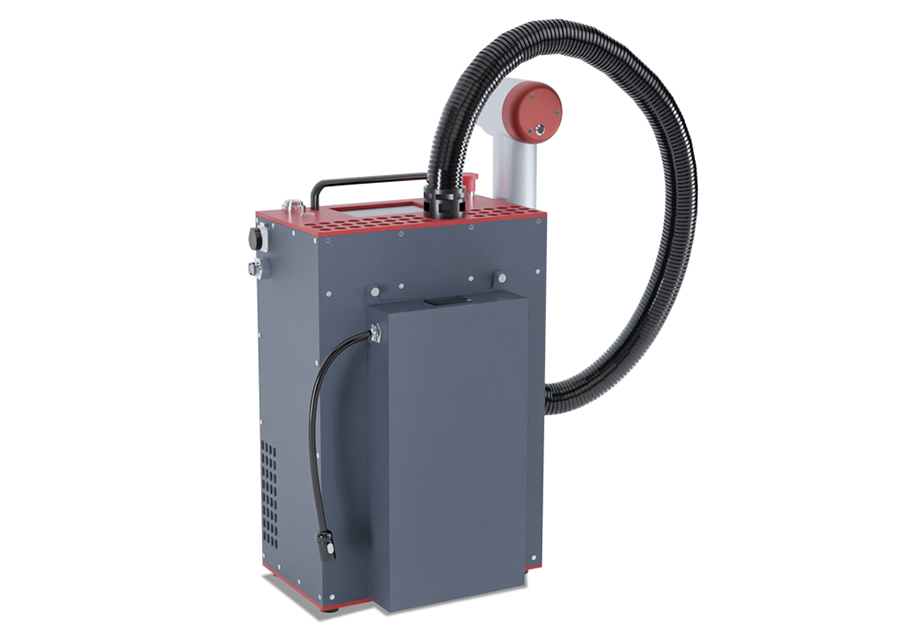
In industrial manufacturing, equipment maintenance, and surface treatment fields, the removal quality of surface contamination directly affects subsequent processing, assembly precision, and service life of workpieces. As environmental regulations tighten and manufacturing standards improve, laser cleaning and dry ice cleaning have become two representative non-chemical cleaning processes widely applied across various industrial sectors. Although both technologies avoid the use of chemical solvents, they differ significantly in working principles, suitable materials, cleaning performance, and cost structures. This article systematically explains their differences from a technical perspective.
I. Different Working Principles
1. Principle of Laser Cleaning
Laser cleaning uses a high-energy laser beam to irradiate the surface of a workpiece. When the contamination layer absorbs the laser energy, it undergoes vaporization, detachment, or photochemical reactions, separating from the substrate. The outcome can be controlled by adjusting:
Laser energy density
Pulse width
Repetition frequency
Spot size
Scanning pattern
This enables precise removal without damaging the substrate. Therefore, laser cleaning operates through photothermal and photochemical desorption mechanisms, making it well-suited for applications requiring high substrate surface precision.
2. Principle of Dry Ice Cleaning
Dry ice cleaning uses high-speed airflow to propel dry ice pellets toward the target surface. The removal of contaminants relies on three synergistic mechanisms:
Thermal shock: Dry ice at approx. −78.5 °C causes the contamination layer to contract and crack.
Kinetic impact: High-speed dry ice particles mechanically fracture the contaminants.
Phase transition & sublimation: Dry ice instantly sublimates into gas, rapidly expanding in volume and carrying away debris.
Dry ice cleaning operates through a low-temperature + kinetic impact + sublimation mechanism, leaving no water or chemical residue, making it suitable for environments with strict cleanliness requirements.
II. Differences in Suitable Contaminants and Materials
Laser cleaning is suitable for removing:
Oxide scale and rust on metals
Weld spatter and heat tint around weld zones
Residues, resins, and oils on molds
Paint, coatings, and plating layers
Surface cleaning of precision components
Dirt on cultural heritage surfaces and stone
Laser cleaning is more effective for hard contamination layers and metallic substrates, especially when the bonding force between contaminant and substrate is strong.
Dry ice cleaning is suitable for removing:
Oils and food residues in food & beverage equipment
Dust and oil inside motors and electrical cabinets
Adhesives, wax, and mold release agents on plastic molds
Equipment that cannot be cleaned with water
Internal cavities, wiring harnesses, and sensitive components
Dry ice cleaning works best on soft contaminants such as oils, dust, and adhesives, but is not suitable for removing oxide scale or rust.
III. Different Effects on Substrates
Laser cleaning:
Enables micrometer-level selective removal
Does not damage substrate when parameters are properly controlled
Maintains surface texture and dimensional accuracy
Suitable for precision manufacturing and high-value components
Dry ice cleaning:
No abrasion or scratching of the substrate
No moisture or corrosion risk
Almost ineffective for oxide scale, rust, or other hard contaminants
Both methods are substrate-friendly, but laser cleaning favors precision processing, while dry ice cleaning favors flexible maintenance.
IV. Environmental and Safety Performance Differences
Laser cleaning environmental & safety characteristics:
No chemicals, no wastewater discharge
Generates fumes and particulates, requiring extraction and filtration
Requires laser safety measures (goggles, isolation zone)
Electrically powered with no consumables
Dry ice cleaning environmental & safety characteristics:
No chemicals and no water residue
Dry ice sublimates into CO₂ without solid waste
High CO₂ concentration requires ventilation
Requires insulated storage and handling due to low temperature
Overall, both processes meet environmental standards but differ in safety focus.
V. Cost Structure and Operational Differences
Laser cleaning cost characteristics:
High initial equipment investment
Almost no consumables
Suitable for continuous long-term operation
Low long-term total cost
Dry ice cleaning cost characteristics:
Moderate equipment cost
Dry ice pellets are the main consumable
Additional cost for production, logistics, and cold-chain transport
Suitable for on-site service and short-term projects
Therefore, laser cleaning is better for factory-based long-term investment, while dry ice cleaning is suitable for mobile maintenance and service-oriented operations.
VI. Differences in Typical Application Scenarios (Text Description)
In real industrial applications, laser cleaning and dry ice cleaning target different contamination types and user demands, making them complementary.
Laser cleaning is commonly used for:
Removal of oxide scale, rust, and coatings on metals
Weld surface pretreatment or post-weld heat tint removal
Aerospace, rail, and automotive component surface treatment
Mold surface cleaning without substrate damage
Precision decontamination of cultural relics and stone materials
Removal of high-bonding or hard contamination layers
Laser cleaning emphasizes precision, hard contaminants, non-destructive removal, and controllability, suitable for high-value industrial environments.
Dry ice cleaning is commonly used for:
Cleaning food and pharmaceutical equipment residues and oils
Cleaning motors, control cabinets, and electrical boxes without moisture
Removing adhesive residues, wax, and release agents in die casting molds
Maintenance of equipment where liquids or chemicals are not permitted
Cleaning internal components, wiring harnesses, and electrical devices
Dry ice cleaning emphasizes soft contaminants, no moisture, safety, and fast operation, suitable for maintenance-driven industries.
In summary:
Laser cleaning is suitable for “hard-to-remove, strongly bonded, precision-required contaminants.”
Dry ice cleaning is suitable for “oil, food residue, electrical dust, and sensitive environments.”
Laser cleaning and dry ice cleaning are both important components of modern environmentally friendly industrial cleaning technologies, but their principles and application logic differ fundamentally:
Laser cleaning is a “photo-processing” cleaning method—ideal for oxide layers, rust, and coatings—emphasizing precision, non-destructive removal, and selectivity.
Dry ice cleaning is a “soft impact” cleaning method—ideal for oil, food residues, and electrical dust—emphasizing no residue, non-conductivity, and safety maintenance.
In real industrial use, the two technologies often form a complementary relationship. Selection should be based on substrate material, contamination characteristics, working environment, and cost model, rather than being treated as simple substitutes.